As you can see below, it has been a while since I've posted to this blog.
This entry will formally be my final post to this blog. All future blog posts will be published on www.silverhillcreative.com.
You can also find me at:
Instagram: @silverhillcreative
Twitter: @silverhillhats
Facebook: /silverhillcreative
I publish additional writings on millinery topics for the "Millinery Operations" column on the website Mr. X Stitch.
This blog will be left up for archival purposes.
Cheers!
~ Kristin
P.S. Come visit me on my new website!

Hat-obsessed lover of things vintage blogging about my millinery creations and other hatters I admire.
Sunday, April 19, 2020

Monday, April 24, 2017
The Journey of a Hat: Re-Blocking Felt
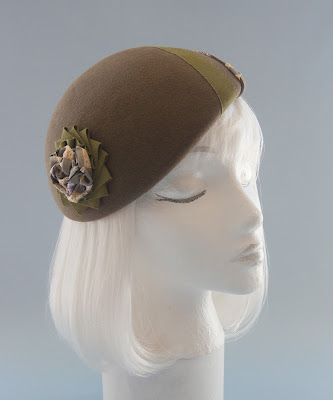
If you have a mass-produced hat and you want to change the trim, repair the shape or even re-block it entirely, you might be out of luck. With traditional millinery (no glue!), it can be much easier to do.
Usually, once I block a felt, I'm done with that part of the process. But in an odd twist of fate, it happened that I re-blocked one particular felt not once, but twice!
Blocking #1:
With a sharply squared-off crown and a cloche brim, I couldn't figure out how to make this shape look cute and wearable. It's a dramatic shape that might have worked for high-fashion, but not for a normal style hat. I never finished this hat.
Blocking #2:

The felt became a free-form cloche with silk rosette and silk-wrapped band. This was one of my earlier creations, and I had listed it in my Etsy shop a long time ago. And it never sold.
In the meantime, my skills as a milliner improved. Some of my earliest work, I am still damn proud of. But this particular hat no longer met my standards for quality. I de-listed it from my shop and decided to re-block the felt. (Felts are expensive! Giving it new life was better than buying a new felt or "wasting" this one on a hat I wasn't proud of.)
Blocking #3:

I was somewhat limited in what shapes I could use because the original felt had been cut down. A beret ended up being perfect!
I still admired the cloche enough that I wanted to pay an homage to it. So I kept the silk-wrapped felt and re-worked the silk rosette. The result is a feminine, elegant piece that I adore! (And unlike the extra-small size of the cloche, this is one-size-fits-all.)
 |
| Silk rosette and ribbon cockade. |
Monday, December 26, 2016
Hats on Screen: Rosie's Cloche
It's been several months since I've written on this blog. (In the meantime, I have been writing the monthly "Millinery Operations" post for Mr. X Stitch.) So, I'm starting back up with a light and easy post.
Let's take a look at this awesome hat!
No, not that one. The other one. Miss Fisher gets the most fabulous hats throughout the series. And I'll highlight some of them in another post, I'm sure. But I am obsessed by this cloche worn by Rosie. (I won't spoil who the character is in case you haven't seen the series.)
I am pretty much in love with this hat. Everything about it is wonderful. It's not dramatic or overly fancy. Those hats get saved for Miss Fisher, of course! But it's not plain, either. It's totally elegant. A perfect balance between dressy and casual.
Let's take a look at this awesome hat!
 |
| Miss Fisher's Murder Mysteries Season 2, Episode 1: "Murder Most Scandalous" |
No, not that one. The other one. Miss Fisher gets the most fabulous hats throughout the series. And I'll highlight some of them in another post, I'm sure. But I am obsessed by this cloche worn by Rosie. (I won't spoil who the character is in case you haven't seen the series.)
 |
| Another view of the hat from Season 2, Episode 1. |
I love the color combination of the aubergine and brown. The colors go together so beautifully. It's a subdued color scheme, but it's not boring. It catches the eye because of its unexpected colors. The shape is simple but lovely. I'm a huge fan of asymmetry anyway. And that ribbon! The moire pattern, the perfect construction and drape, the angled placement, the cut ends ... everything about the ribbon is exquisite.
 |
| The hat in Season 2, Episode 6: "Marked for Murder" |
This same hat makes an appearance in three episodes. (Side note: Actors and costumers will appreciate how significant this is. It takes a wardrobe from "costume" to a character's own clothing.)
The third time we see this hat, the lighting makes it look a little more burgundy. (Possibly it's a new version of the hat with a different colored straw, but I think it's probably the same hat and just a function of the lighting.)
 |
| Season 2, Episode 12: "Unnatural Habits" |
Rosie isn't a major character, but she does get to be in three episodes. And she wears hats other than just this one. I just love the everyday style of this hat. She's not fantastically wealthy, and she's not poor. She's stylish but not glamorous. Sometimes minor characters get some of the best hats in movies, and this is just one example.
Monday, September 5, 2016
Labor Day, "Slow Fashion" and the Maker Movement
Happy Labor Day!
If you're anything like I am, you were raised that Labor Day was just a day off. If you work (or go to school), here's an extra day off to reward you. Have a picnic! Shop some sales! Stop wearing white!
Today, I am working. Like many makers, I'm a one-woman show. I source my own supplies. I make everything by hand myself. I take the photos. I do my own bookkeeping and marketing. When someone buys one of my hats, I pack it up myself and take it to the post office. ... And I'm very lucky.
 |
| This handmade cloche will be shipping out tomorrow. |
Labor Day is an important day to the fashion industry. The origin and purpose of Labor Day is to acknowledge the achievements of the labor movement.
More than one hundred years ago, the Triangle Shirtwaist Factory Fire killed 146 people, mostly young women. Since then, the U.S. has instituted many reforms that make workplaces safer.
 |
| Union members demonstrating after the Triangle Shirtwaist fire. |
That's the good news. The bad news is that, in recent years, more and more fashion companies have moved their manufacturing out of the U.S. — and into countries with more lax regulations. Not only has this caused the sad decline of New York City's Garment District, but more significantly, it has resulted in tragedies such as the collapse of a garment factory complex in Bangladesh that killed more than 1,100 people in 2014. ... 2014!
What a lot of people don't realize is that all clothes are handmade.
Yep. That $15 pair of jeans wasn't made by a machine. They were made by a person sitting at a sewing machine and using their hands.
And avoiding clothing made by exploited workers is so hard. It's more expensive. It requires research. It requires time and effort and labor.
I'm guilty of it, too. I stay away from cheaply produced clothes that are churned out en masse and designed to last a season (or less) before they're replaced by the next trendy item. But I bought a new packet of underwear the other day and didn't look at where they were made. I checked just now. ... Bangladesh.
If I hadn't bought that underwear, I wouldn't be driving the company out of business. If a whole bunch of us boycott Forever 21, there will still be plenty of people buying their clothes. And nobody is going to trade buying a $20 dress from H&M for buying a handmade hat from me.
But instead of having a day off or a picnic this Labor Day, I am using it as a reminder to stop and think about where my clothing comes from.
Here's a great piece from The Atlantic about why it's good to invest more money in pieces of clothing.
Take a look around for "slow fashion." Sustainable or ethically produced clothing. Fair trade items. If it seems like the handmade piece you love is over-priced, it's not (necessarily) because it was made by a pretentious hipster in Brooklyn. It's because you're comparing it to the distorted, inappropriately low prices of "fast fashion."
Here are some neat resources:
- The Clean Clothes Campaign
- Fashion Revolution (#whomademyclothes)
- Slow Fashioned
Tuesday, August 23, 2016
Why Giving Up On My Dream Actually Feels Pretty Damn Good
This is a very personal post, but I wanted to open up...
Several years ago, I quit smoking. The thing that finally made the difference for me, after multiple "tries" was making up my mind 100%. Before, when I "tried" to quit, I always knew in the back of my mind that I'd smoke again. The only question was when the cravings would be "bad enough" for me to give in. Once I absolutely decided to quit, I still had cravings ... but my mind was no longer at war with itself. I didn't have to debate or make decisions because I'd already made it.
All my life, I've had one great passion: theatre. And my greatest fantasy has always been to star in a Broadway musical (or play). But to quote from Follies, "heck, I'd even play the maid..."
Even though I never truly pursued a theatre career, I kept telling myself that I would some day. It's one thing to not actively chase your dream. It's another thing to admit to yourself "I will never achieve this." It's a grieving process.
But just like with quitting smoking, making up my mind has made it so much easier to move on. I'm still not a professional actor — but now I'm not saying I should be and loathing myself because I'm not. I'm a non-professional by choice, not because of laziness or failure.
I found a journal of mine from late 2007, in which I constantly wrote about how much I wanted to be a professional actor ... or do something else creative. But I didn't know what that was. Since then, I discovered hat-making. And everything just clicked.
I love millinery. Do I love it as much as theatre? Almost. Not quite, but almost. And one nice thing about millinery is that it doesn't have to be separate from theatre. I've made hats for The Pirates of Penzance and Born Yesterday. I love the millinery I see on stage and in movies/TV.
Sure, if I had a magic wand, I'd still choose to be a Broadway actress. But I'd rather be doing shows in community theatre than not performing at all because I'm being rejected from professional gigs. I've also realized that my personality isn't suited to the competitiveness and constant rejection of a professional actor's life.
Plus, there's this:
I am currently taking a break from even the community theatre productions that swallow my time so that I can really focus on my business. It feels good to have made the decision. I feel a new-found sense of peace. I am no longer a wannabe actor; I am an actual milliner.
So, on the whole, I'd say giving up on my dream feels pretty damn good. (Oh, and do I now dream about my hats appearing on Broadway or TV/movies? Hell yes!)
Several years ago, I quit smoking. The thing that finally made the difference for me, after multiple "tries" was making up my mind 100%. Before, when I "tried" to quit, I always knew in the back of my mind that I'd smoke again. The only question was when the cravings would be "bad enough" for me to give in. Once I absolutely decided to quit, I still had cravings ... but my mind was no longer at war with itself. I didn't have to debate or make decisions because I'd already made it.
All my life, I've had one great passion: theatre. And my greatest fantasy has always been to star in a Broadway musical (or play). But to quote from Follies, "heck, I'd even play the maid..."
Even though I never truly pursued a theatre career, I kept telling myself that I would some day. It's one thing to not actively chase your dream. It's another thing to admit to yourself "I will never achieve this." It's a grieving process.
But just like with quitting smoking, making up my mind has made it so much easier to move on. I'm still not a professional actor — but now I'm not saying I should be and loathing myself because I'm not. I'm a non-professional by choice, not because of laziness or failure.
 |
| Me as Grace Farrell in Annie — wearing a vintage hat that influenced my desire to be a milliner. |
I found a journal of mine from late 2007, in which I constantly wrote about how much I wanted to be a professional actor ... or do something else creative. But I didn't know what that was. Since then, I discovered hat-making. And everything just clicked.
I love millinery. Do I love it as much as theatre? Almost. Not quite, but almost. And one nice thing about millinery is that it doesn't have to be separate from theatre. I've made hats for The Pirates of Penzance and Born Yesterday. I love the millinery I see on stage and in movies/TV.
Sure, if I had a magic wand, I'd still choose to be a Broadway actress. But I'd rather be doing shows in community theatre than not performing at all because I'm being rejected from professional gigs. I've also realized that my personality isn't suited to the competitiveness and constant rejection of a professional actor's life.
Plus, there's this:
"Rachel's childhood ambition was to become an actress and this developed into a keen interest in theatre costume. It is from this sense of the dramatic ... that Rachel's passion for millinery has evolved."I found that while reading the web site of Rachel Trevor-Morgan, one of Britain's most successful milliners (whose creations have been worn by the Queen, among others). I could do worse than to follow in her footsteps!
 |
| A 1940s-inspired fedora that allowed me to fulfill my love of vintage styles. (This piece already sold.) |
I am currently taking a break from even the community theatre productions that swallow my time so that I can really focus on my business. It feels good to have made the decision. I feel a new-found sense of peace. I am no longer a wannabe actor; I am an actual milliner.
So, on the whole, I'd say giving up on my dream feels pretty damn good. (Oh, and do I now dream about my hats appearing on Broadway or TV/movies? Hell yes!)
Saturday, February 6, 2016
Philosophy of Style
For lots of people, wearing a hat can be scary. I wrote before about how to wear a hat. It takes confidence. It also takes having a sense of your own style ... which is frankly, kind of hard to do.
My ideal style is a mixture of eclectic and classic. Vintage inspired with a touch of quirkiness.
But in reality, what I wear tends toward warm and comfortable. So I throw on a sweater and a pair of jeans. Let's face it: I live in Vermont where, (a) it's often cold, and I run about 10-20 degrees colder than most people and (b) ... well, not that many people care about fashion. (People regularly wear jeans and sneakers to expensive restaurants.)
One day I was searching #vermontstyle on Instagram. Surprise! There's not much there! But it did lead me to discover Stasia of Thrift Me Pretty. Her philosophy of style so resonated with me.
Stasia is a style coach who focuses a lot on thrift-shop finds. (Hooray for not contributing to "fast fashion"!) But more importantly, she talks a lot about finding a style that's authentic to you. When she posted the above photo, I was saying "YES! This!"
Even on my laziest days, I always throw on a cute hat to finish off the outfit. Sure, you're not going to wear some bejeweled, beplumed extravagant concoction to the mall. But a fedora or cloche or beret goes with almost everything. Even in Vermont, where people "don't have anywhere to wear a hat."
After I commented on her post, Stasia contacted me about a collaboration. I sent her some hats on loan. This was my first collaboration with a style blogger or style coach. I was a little nervous and a lot excited.
It was a thrilling success. By that, I don't mean that I sold hats to every one of her followers. I didn't. But I did get exactly what I wanted: Someone whose style philosophy compliments mine perfectly demonstrating how a hat can be a casual accessory that adds just the right amount of sass.
She took photos in them and talked about how to wear a hat on her own blog. Look how easily a simple cloche pairs with a denim jacket and a casual dress and boots. It doesn't even look out of place in a snowy Vermont field! (Oh, and extra benefit of cloches: They keep the tips of your ears warm.)
I didn't realize until I read her blog post that Stasia was a little intimidated by the fedora ... because the message she sent me said: "In LOVE with the fedora! I've never worn one before, and girl, I've been missing out!!"
I have a sneaking suspicion that if more people gave hats a try, they would discover that they, too, are missing out. ;)
Even on my laziest days, I always throw on a cute hat to finish off the outfit. Sure, you're not going to wear some bejeweled, beplumed extravagant concoction to the mall. But a fedora or cloche or beret goes with almost everything. Even in Vermont, where people "don't have anywhere to wear a hat."
 |
| Stasia in a cloche by Silverhill Creative Millinery. |
It was a thrilling success. By that, I don't mean that I sold hats to every one of her followers. I didn't. But I did get exactly what I wanted: Someone whose style philosophy compliments mine perfectly demonstrating how a hat can be a casual accessory that adds just the right amount of sass.
She took photos in them and talked about how to wear a hat on her own blog. Look how easily a simple cloche pairs with a denim jacket and a casual dress and boots. It doesn't even look out of place in a snowy Vermont field! (Oh, and extra benefit of cloches: They keep the tips of your ears warm.)
I didn't realize until I read her blog post that Stasia was a little intimidated by the fedora ... because the message she sent me said: "In LOVE with the fedora! I've never worn one before, and girl, I've been missing out!!"
I have a sneaking suspicion that if more people gave hats a try, they would discover that they, too, are missing out. ;)
Wednesday, October 7, 2015
Theatre Hats (aka Where I Disappeared To)
I've been slacking on the social media front lately. (Exception: My blog post "The C-Word" on the site Mr. X Stitch where I'm now a monthly guest blogger.)
I couldn't let this pathetic thing appear on stage. There was no other hat he could use, since this was the only one that fit him. I wasn't the costumer; it wasn't technically my job. But this stained, misshapen cowboy hat was an affront to my senses as a milliner. So I took it home to fix it.
First, I tried to spot clean it ... and it developed weird peach blotches (I'm guessing from someone previously using bleach to try to clean it). There were also odd mint green blotches. Oops! That's what happens with an old hat of indeterminate fiber content (assuming wool, though), years of sweat, and previous cleaning attempts. But I was able to get the worst of the staining out.
Next, I added sizing to the the inside of the crown and portions of the brim. I don't have blocks for this shape/size, so I steamed it and reshaped it by hand. It looked much better.
Finally, I used dye lightly brushed on to even out the tone and cover the worst of the pale splotches. The overall effect was a mottled look, but it still looked pretty good.
I removed the narrow trim and replaced it with brown grosgrain and a small pheasant feather.
Sadly, I didn't get a really great photo of the hat in natural lighting. The "after" photo is an iPhone snapshot in the weird lighting of the greenroom — and after the hat had been battered about and sweated on for 12 rehearsals and shows.
When I brought the hat to the first dress rehearsal, no one could believe it was the same hat. That was my goal. I didn't get any pay or credit in the program for rehabilitating the cowboy hat, but it was worth it anyway. My work was pretty good for a crappy hat and the wrong blocks.
Oh, and I wore it in the show, too! My character stole it a few times in a dance and wore it for a few seconds. (Unfortunately, I had put it on backwards in this one instance that was photographed.)
So where the hell have I been? Where I usually am when I'm not working on hats: working on theatre. This time it was the musical Curtains, which is one part murder mystery, one part pastiche of Oklahoma! and overall a hilarious love letter to musical theatre.
The show-within-a-show is a Western, which means cowboy hats. The theatre was a community theatre, which means hats that have been used and abused for who knows how many shows. Theatre is rough on hats! They're battered on stage and often stored in less-than-ideal, cramped conditions. One of our male leads had this hat:
 |
| Poor, beaten-up costume hat. |
I couldn't let this pathetic thing appear on stage. There was no other hat he could use, since this was the only one that fit him. I wasn't the costumer; it wasn't technically my job. But this stained, misshapen cowboy hat was an affront to my senses as a milliner. So I took it home to fix it.
 |
| The hat in the show. |
First, I tried to spot clean it ... and it developed weird peach blotches (I'm guessing from someone previously using bleach to try to clean it). There were also odd mint green blotches. Oops! That's what happens with an old hat of indeterminate fiber content (assuming wool, though), years of sweat, and previous cleaning attempts. But I was able to get the worst of the staining out.
 |
| "After" |
Finally, I used dye lightly brushed on to even out the tone and cover the worst of the pale splotches. The overall effect was a mottled look, but it still looked pretty good.
I removed the narrow trim and replaced it with brown grosgrain and a small pheasant feather.
Sadly, I didn't get a really great photo of the hat in natural lighting. The "after" photo is an iPhone snapshot in the weird lighting of the greenroom — and after the hat had been battered about and sweated on for 12 rehearsals and shows.
When I brought the hat to the first dress rehearsal, no one could believe it was the same hat. That was my goal. I didn't get any pay or credit in the program for rehabilitating the cowboy hat, but it was worth it anyway. My work was pretty good for a crappy hat and the wrong blocks.
Oh, and I wore it in the show, too! My character stole it a few times in a dance and wore it for a few seconds. (Unfortunately, I had put it on backwards in this one instance that was photographed.)
 |
| "Thataway" from Curtains. (Photo by Adam Silverman Photography.) |
Tuesday, August 4, 2015
Periscope! Lessons Learned
I have just recently discovered the world of Periscope. For those of you who don't know, it's a broadcasting app. "Scopes" can be watched live or replayed for 24 hours.
Some people just talk to the camera. Some people might sing or play an instrument. And some are just plain boring.
What's neat about it is that people who are watching live can ask questions or post comments. You can also give hearts (both live and on replay) throughout the broadcast. (And unlike FB or Instagram, you can give more than one heart.)
I took the plunge the other day, choosing to broadcast my blocking of a hat. Here it is:
A couple things: If you notice me staring at the screen oddly, that's me reading comments that pop up on the screen (but they don't show up in this saved video). And I was trying to figure out whether it was better for sound to have the door closed (which was echoey) or leave it open and have the air conditioner noise.
I think I was too ambitious! It was difficult to keep talking and keep it entertaining while struggling with a stubborn felt. So I cut it short rather than keep fumbling publicly. It only took a short while to then get the actual felt blocked.
So then I did this (much, much shorter) Periscope to redeem myself:
I think Periscope is an awesomely fun, interactive time. Even if you don't want to broadcast yourself, it's a fun place to watch, learn and more. I am @SilverhillHats on Periscope. If you follow my account, you can watch the next time I do a broadcast.
Friday, July 31, 2015
"Hat of the Week," Periscope, Procrastination and More

It's the hat of the week ... only not anymore. That's right, it sold! But I thought I'd at least talk about it briefly and oh, yeah, the previous week's hat of the week.
So this is why I didn't blog about last week's "Hat of the Week." I was on vacation in Maine. Every year for the past several years we have gone to Ogunquit and Portland. The ocean is the most beautiful, relaxing and inspiring sight to me. I wish I could afford a house on the coast. *sigh*
This was that week's Hat of the Week:
 |
| 1950s-inspired, vintage-style bridal cap |
Lots of beads! So many beads! I probably should have tracked how long it took me, but I didn't. But that's what I have Netflix for. It's a great way for me to stay entertained while doing detail work. And, of course, my favorite things to watch are period pieces: Downton Abbey, Miss Fisher's Murder Mysteries, etc.
It's ecru silk over a buckram base. Hundreds of seed beads, plus flower sequins, freshwater pearls and Swarovski crystals. It's still available in my Etsy shop (though no longer at the promotional price).

So I'm going to talk about supplies again with this hat. I bought this ribbon ages ago. I made a large cockade from it (now sold). I almost used it several times on hats, but the project was never quite right. That happens to me a lot, especially with vintage ribbons. I buy supplies with no specific project in mind, and it might be a long time before I actually use them.
I got a whole spool of this ribbon. It's vintage. I'm not sure what the content is, but it's very soft and supple. Even with the soft drapiness, the bow was initially straight. I wanted it to be droopy, so I gave it a shot of steam.
The felt is unusual. I bought it from another milliner's "destashing" shop. It's much thicker than other fur felts. It's also pre-sized (pre-stiffened), especially at the bottom.
Oh, and I'll be using this same type of felt to block a cloche shape today on my first ever Periscope! Happening in about an hour from now (at 3 p.m. EDT). I'm @SilverhillHats on Periscope. Join me if you'd like to see a glimpse into how a hat is made.

Thursday, July 30, 2015
So Much To Do!
Creatives are messy people. It just happens. But I've gotten to my breaking point. Whew! And I'm trying to save money, so I don't want to buy a bunch of expensive storage containers to put my expanding collection of supplies in. That means I need to get down to the work of getting organized.
Here is my studio recently. Hat blocks strewn about. Veiling that I pulled out to test out using on a wedding hat — and decided not to use ... and then didn't put away. Yep that's me.
In the background you can see the mannequin head I use to shoot photos of my hats, the canvas I painted to avoid the ubiquitous solid-white background and the cheap white fabric I had used as a background before that.
Exciting for me, I bought some new vinyl backdrops online! That means I'll be able to ditch the stacked books that put the mannequin head high enough. (Otherwise, the line between the canvas and the surface of the table would be smack dab in the middle of the image.) And my photos will look more spiffy and professional over all. Now I just need to get the backdrops ready to hang, and the hangers set at the right height. ... Then the big task of re-shooting all of my hats, editing the photos, etc.!
Plus, I have a custom order for two custom hats. And general organization to do. And I want to make my blog nicer looking, improve my Instagram feed, and all these other things to help build my business. (Oh, and I'm in rehearsals for two shows right now: Chess and Curtains.)
This is an exciting time for my business. I have an interesting promotion planned for August that will be happening while I work on new photos. Stay tuned!
Here is my studio recently. Hat blocks strewn about. Veiling that I pulled out to test out using on a wedding hat — and decided not to use ... and then didn't put away. Yep that's me.
In the background you can see the mannequin head I use to shoot photos of my hats, the canvas I painted to avoid the ubiquitous solid-white background and the cheap white fabric I had used as a background before that.
Exciting for me, I bought some new vinyl backdrops online! That means I'll be able to ditch the stacked books that put the mannequin head high enough. (Otherwise, the line between the canvas and the surface of the table would be smack dab in the middle of the image.) And my photos will look more spiffy and professional over all. Now I just need to get the backdrops ready to hang, and the hangers set at the right height. ... Then the big task of re-shooting all of my hats, editing the photos, etc.!
Plus, I have a custom order for two custom hats. And general organization to do. And I want to make my blog nicer looking, improve my Instagram feed, and all these other things to help build my business. (Oh, and I'm in rehearsals for two shows right now: Chess and Curtains.)
This is an exciting time for my business. I have an interesting promotion planned for August that will be happening while I work on new photos. Stay tuned!
Friday, July 17, 2015
"Hat of the Week": Keeping it Simple
 |
| Brown Fur Felt Beret with Swarovski Crystals |
Again my title refers to two things: the length of this entry, and the style of the hat.
This hat is another example of why cost of supplies is more important than time when I price a hat. In terms of style, this is pretty simple. It wasn't elaborate to construct. I have less expensive hats that took more time to make. But the materials on this hat are top-of-the-line, and that means more expensive.
It features 27 scattered Swarovski crystals and 3 freshwater pearls. The body of the hat is long-nap fur felt, one of the more expensive styles of felt. (If you missed it, I have a blog post all about types of millinery felt.)
It's a little bit fancy, and a lot wearable. It can be dressed up or down. And what I love about this beret shape is that it can be worn in many different ways. It can be set to the back of the head like a pillbox. It can be worn straight on in a cap style. Or it can be worn at a more extreme angle toward one ear. The last way is how I wear my own beret of this shape. It's a very Kate Middleton style!
Wednesday, July 8, 2015
"Hat of the Week": You Can't Predict What People Will Like
 |
| Woven straw jute cloche with rosette. |
This hat is 35% off, only through July 13. No coupon code needed.
I like the hats I make. I wouldn't make them if they didn't please me aesthetically. But what surprises me is how sometimes the hats I'm not over the moon for are the ones other people like the best.
A while back, I had a hat in stock that I wasn't in love with. It had been in my shop for a while without attracting much attention. I was even thinking of removing the trim and re-doing the decoration. To my surprise, someone bought that very hat (over other hats in my shop I thought were nicer).
This one is another example. It was shown in the Milliners of Etsy fashion show, along with several others of my hats. I do really like this hat — but I thought some of the other hats I showed were better. This hat was the clear favorite among just about everyone (fellow milliners and non-milliners). Most people liked how the light filtered through the weave of the hat, something that's not apparent from the product photos. I was amazed by how many compliments I got. Differing opinions can be fun and surprising.
This is the only jute hat I've ever made. It's very rough feeling, so I lined it with China silk to make it comfortable to wear. You can visit the listing to see more photos, including the inside. It's a perfect hat for warm summer days.
Questions or comments on my hats, creative inspiration or millinery process are always welcome!
 |
| A model displays the hat in a fashion show. (Photo by Ting Shen.) |
Monday, July 6, 2015
The Elephant in the Room
I think a follow-up to my post "Not Everything Handmade Deserves a Gold Star" is in order.
I knew from the beginning it would be controversial, and that's why I wrote it. I chose certain language ("statistically speaking ... your items suck") to be deliberately incendiary. It's not that I'm really whiny or a bitch. I wanted specifically not to sugarcoat things in any way. My goal was to make people think by taking an overtly negative tone. I wanted to at last speak out and draw attention to the elephant in the room.
The goal of the piece was absolutely not to sell my work by trashing others' items. Resellers or sloppy crafters are not my competition! I have the greatest respect and admiration for my competitors. I interact with them on Facebook, Instagram, Etsy, etc. We cheer each other on; we admire each other's work.
Someone said I'm too negative and needed to focus on positivity. ... And I don't disagree with her — but I think it makes what I wrote to be all the more relevant.
I love the maker movement. But in all the praise for handmade, there's one question very few people are asking (at least publicly): Is it any good?
Creatives love to receive compliments. And I think most of them like to give compliments. But it can be a bit like the boy who cried wolf. Do it too often and too indiscriminately, and people will start to tune you out.
It's the same reason Instagram marketing advice tells people to write something more individual and thoughtful than "Great pic!" If you compliment someone — "nice work" — and you give that same compliment to 30 other makers, none of them are going to feel flattered. When people compliment someone's work without truly caring about it, I just have to wonder why. I was asked "What's the point of your post?" And that is an excellent question and a very valid point. The answer to that is: What is the point of giving equal praise to everyone regardless of quality of work?
Lots of people complain about the entitlement attitudes we see a lot. I think it's more like American Idol auditions, when people say "But my boyfriend/voice teacher/grandma says I'm great!" Not everybody's work is great, and that's okay. I think it does a disservice to both buyers and sellers to pretend that everything "handmade" is equally great.
The ultimate goal of an artist — in my opinion — should be to grow and improve. You can find heaps of advice on marketing, improving your photos, working on SEO, etc. And do work on those things. But don't stop working on your craft.
I have a saying I like to use: Art is subjective ... except when it's not. Something can be (subjectively) pretty to look at but (objectively) poorly constructed. My first hats — which are in my personal collection, not in my shop — are nice to look at, and I'm still proud of them and still wear them. But I can also show you the flaws.
The hat above was the second hat I ever made. I share the flaws openly because it is not for sale, and it's not good enough to sell. But I've learned since then. My craft has improved. I now know how to make my stitches invisible. I am better at constructing hats. Many wise people say it's a waste of time to compare yourselves to others. That's it's absolutely true. I am far, far from being the best hat-maker ever. And I'm also far from being the worst. I do good work. And I am constantly trying to improve. Some people probably don't like my work. That's okay. Other people praise my work maybe more than it deserves. I'm not out to best anyone; I'm out to better myself.
When I say "statistically speaking ... your items suck," it's not about promoting myself through disparaging others. I'm talking about the elephant in the room: the simple fact that not all handmade is good, whether that means it's poorly constructed or copies or lightly embellished resold items. (The word "statistically" is key there. I don't mean that your items in particular suck. I do mean that there are a lot of sad crafted items out there in the world.)
It is important to me that the handmade movement has a good reputation. (And in many circles it does not.) To me, that means praising other artists who are truly worthy of praise. And it also means not celebrating every item just because it's called "handmade."
One person sent me a message saying that it gives sellers false hope to encourage them to focus on SEO, product photos, tags, etc. "when everyone responding knows it is just tragic, fugly craft that no one is ever going to buy." Sometimes, sellers need to improve their products.
And sometimes, we need to talk about what handmade means to each of us.
I know of knitters who spin their own yarn. Their finished products are the ultimate in handmade. But I wouldn't say someone who knits with store-bought yarn has less of a right to the word handmade. That's totally handmade in my book. But what about someone who buys a mass-produced knit accessory and sews a button or bow on? I think Etsy calls that handmade; I'm not sure that I do.
Another person mentioned mugs, which I hadn't thought of. It's a perfect example. You can find artists who make their own pottery mugs, fire them in their own kiln, glaze them, etc. You can also find fine artists who have their original paintings printed onto mugs. And you can find "Sharpie mugs." I'd never heard of Sharpie mugs before. If you get a certain kind of Sharpie, you can draw on a blank mug and bake it to make it permanent. Obviously, even within this category, there is a huge range of quality: from painstakingly reproducing calligraphy to just scrawling on a mug in poor handwriting. A hastily scribbled Sharpie mug simply should not be called just as good as a hand-thrown, hand-glazed mug.
They're all handmade, but they're not all good. If that makes me negative to say so, then so be it. Personally, I think praising quality work — and refusing to praise low-quality work — actually is a positive thing.
But, hey, we're each entitled to our own opinions.
I knew from the beginning it would be controversial, and that's why I wrote it. I chose certain language ("statistically speaking ... your items suck") to be deliberately incendiary. It's not that I'm really whiny or a bitch. I wanted specifically not to sugarcoat things in any way. My goal was to make people think by taking an overtly negative tone. I wanted to at last speak out and draw attention to the elephant in the room.
The goal of the piece was absolutely not to sell my work by trashing others' items. Resellers or sloppy crafters are not my competition! I have the greatest respect and admiration for my competitors. I interact with them on Facebook, Instagram, Etsy, etc. We cheer each other on; we admire each other's work.
I love the maker movement. But in all the praise for handmade, there's one question very few people are asking: Is it any good?
Someone said I'm too negative and needed to focus on positivity. ... And I don't disagree with her — but I think it makes what I wrote to be all the more relevant.
I love the maker movement. But in all the praise for handmade, there's one question very few people are asking (at least publicly): Is it any good?
Creatives love to receive compliments. And I think most of them like to give compliments. But it can be a bit like the boy who cried wolf. Do it too often and too indiscriminately, and people will start to tune you out.
It's the same reason Instagram marketing advice tells people to write something more individual and thoughtful than "Great pic!" If you compliment someone — "nice work" — and you give that same compliment to 30 other makers, none of them are going to feel flattered. When people compliment someone's work without truly caring about it, I just have to wonder why. I was asked "What's the point of your post?" And that is an excellent question and a very valid point. The answer to that is: What is the point of giving equal praise to everyone regardless of quality of work?
Lots of people complain about the entitlement attitudes we see a lot. I think it's more like American Idol auditions, when people say "But my boyfriend/voice teacher/grandma says I'm great!" Not everybody's work is great, and that's okay. I think it does a disservice to both buyers and sellers to pretend that everything "handmade" is equally great.
The ultimate goal of an artist — in my opinion — should be to grow and improve. You can find heaps of advice on marketing, improving your photos, working on SEO, etc. And do work on those things. But don't stop working on your craft.
I have a saying I like to use: Art is subjective ... except when it's not. Something can be (subjectively) pretty to look at but (objectively) poorly constructed. My first hats — which are in my personal collection, not in my shop — are nice to look at, and I'm still proud of them and still wear them. But I can also show you the flaws.
 |
| The overall look of this hat is good. But up close you can see an awkwardly constructed bow. The inside lacks a head size ribbon, and has ugly visible stitches. In all three photos, you can see shadows of where the stitching that holds down the folded edge is inelegant and poorly done. Those stitches should be invisible. |
The hat above was the second hat I ever made. I share the flaws openly because it is not for sale, and it's not good enough to sell. But I've learned since then. My craft has improved. I now know how to make my stitches invisible. I am better at constructing hats. Many wise people say it's a waste of time to compare yourselves to others. That's it's absolutely true. I am far, far from being the best hat-maker ever. And I'm also far from being the worst. I do good work. And I am constantly trying to improve. Some people probably don't like my work. That's okay. Other people praise my work maybe more than it deserves. I'm not out to best anyone; I'm out to better myself.
When I say "statistically speaking ... your items suck," it's not about promoting myself through disparaging others. I'm talking about the elephant in the room: the simple fact that not all handmade is good, whether that means it's poorly constructed or copies or lightly embellished resold items. (The word "statistically" is key there. I don't mean that your items in particular suck. I do mean that there are a lot of sad crafted items out there in the world.)
It is important to me that the handmade movement has a good reputation. (And in many circles it does not.) To me, that means praising other artists who are truly worthy of praise. And it also means not celebrating every item just because it's called "handmade."
One person sent me a message saying that it gives sellers false hope to encourage them to focus on SEO, product photos, tags, etc. "when everyone responding knows it is just tragic, fugly craft that no one is ever going to buy." Sometimes, sellers need to improve their products.
And sometimes, we need to talk about what handmade means to each of us.
I know of knitters who spin their own yarn. Their finished products are the ultimate in handmade. But I wouldn't say someone who knits with store-bought yarn has less of a right to the word handmade. That's totally handmade in my book. But what about someone who buys a mass-produced knit accessory and sews a button or bow on? I think Etsy calls that handmade; I'm not sure that I do.
Another person mentioned mugs, which I hadn't thought of. It's a perfect example. You can find artists who make their own pottery mugs, fire them in their own kiln, glaze them, etc. You can also find fine artists who have their original paintings printed onto mugs. And you can find "Sharpie mugs." I'd never heard of Sharpie mugs before. If you get a certain kind of Sharpie, you can draw on a blank mug and bake it to make it permanent. Obviously, even within this category, there is a huge range of quality: from painstakingly reproducing calligraphy to just scrawling on a mug in poor handwriting. A hastily scribbled Sharpie mug simply should not be called just as good as a hand-thrown, hand-glazed mug.
They're all handmade, but they're not all good. If that makes me negative to say so, then so be it. Personally, I think praising quality work — and refusing to praise low-quality work — actually is a positive thing.
But, hey, we're each entitled to our own opinions.
Thursday, July 2, 2015
Not Everything Handmade Deserves a Gold Star
If you know Etsy sellers, you've probably heard them whine about views, search algorithms, SEO and — the number one complaint — outside manufacturing. (Gasp!)
My complaint isn't Etsy, not really. It's that, if you're an Etsy seller, statistically speaking ... your items suck. Or they aren't truly handmade. Or both.
Yes, I said it. Some handmade items suck. And not in a funny Regretsy sort of way.
I feel like there's a huge pressure on creatives to treat one another as equals. On Etsy, it is outright forbidden to say anything negative about another seller. Period.
Sure, we don't want to have a petty insult fest. There's no point to saying "Your stuff sucks." It's just mean-spirited.
But while we avoid calling people out on the carpet, we also translate that into patting everybody on the back. "You made that? Good job!" On Instagram and Facebook and Etsy, there's a likes-for-likes trend.
"I liked your page. Please like mine back."
No.
If I like your work, I will like your page (or follow your Instagram or favorite your Etsy shop). And, unless you are a personal friend, that is the only reason I will like your page. I don't really care about having followers whose only reason for following me is because they think they'll automatically get a return like/follow/favorite.
Here is one artisan I recently discovered and liked on FB, IG and Etsy:
That is beautiful work!
Contrast it with a lot of "steampunk" "handmade" items, which just make me yawn with how derivative they are. When steampunk started, artists disassembled old watches and machines and used the parts for unique creations. Now craft stores sell mass-produced gear-shaped pieces. Just hang those gears off a mass-produced chain or glue them onto a mass-produced hat and — voilà! — a "handmade" accessory.
The handmade items I most admire are made with a combination of skill, time and creativity. And that's pretty rare to find.
I remember being in elementary school and somebody's mom doing the parents' career day thing. She made handmade cards and bookmarks. She bought stamps from the craft store and stamped three leaves down the center of card stock, cut it out, glued it to a larger piece of card stock, punched a hole in the top and put a ribbon through. And she sold these at craft fairs.
Handmade? Absolutely! But even my elementary-school self was cynical. Buying mass-produced stamps to make handmade bookmarks? Pfft! Anybody can do that! What that handmade artist showed our class years ago involved minimal time, minimal skill and minimal creativity.
There are a lot of handmade artists out there who are assemblers: merely stamping a notecard or hanging a pendant off a chain. Not much time, skill or creativity involved.
If you can't excel at all three, excel at one. I've thought all of the following about handmade items:
More:
My complaint isn't Etsy, not really. It's that, if you're an Etsy seller, statistically speaking ... your items suck. Or they aren't truly handmade. Or both.
Yes, I said it. Some handmade items suck. And not in a funny Regretsy sort of way.
I feel like there's a huge pressure on creatives to treat one another as equals. On Etsy, it is outright forbidden to say anything negative about another seller. Period.
Sure, we don't want to have a petty insult fest. There's no point to saying "Your stuff sucks." It's just mean-spirited.
But while we avoid calling people out on the carpet, we also translate that into patting everybody on the back. "You made that? Good job!" On Instagram and Facebook and Etsy, there's a likes-for-likes trend.
"I liked your page. Please like mine back."
No.
If I like your work, I will like your page (or follow your Instagram or favorite your Etsy shop). And, unless you are a personal friend, that is the only reason I will like your page. I don't really care about having followers whose only reason for following me is because they think they'll automatically get a return like/follow/favorite.
Here is one artisan I recently discovered and liked on FB, IG and Etsy:
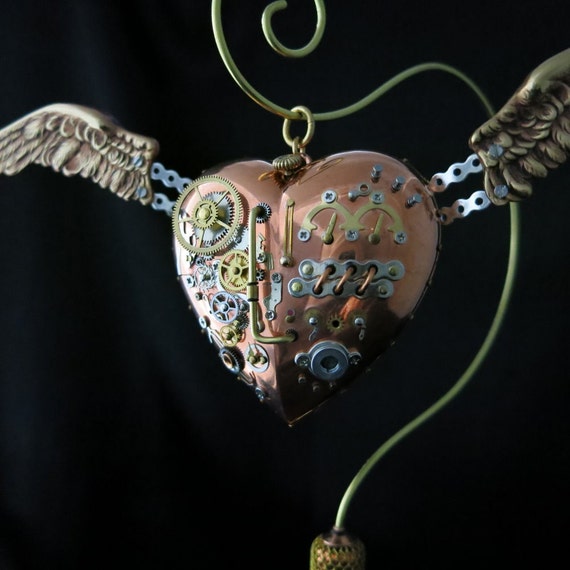 |
| Steampunk heart sculpture by Steelhip Design |
That is beautiful work!
Contrast it with a lot of "steampunk" "handmade" items, which just make me yawn with how derivative they are. When steampunk started, artists disassembled old watches and machines and used the parts for unique creations. Now craft stores sell mass-produced gear-shaped pieces. Just hang those gears off a mass-produced chain or glue them onto a mass-produced hat and — voilà! — a "handmade" accessory.
The handmade items I most admire are made with a combination of skill, time and creativity. And that's pretty rare to find.
I remember being in elementary school and somebody's mom doing the parents' career day thing. She made handmade cards and bookmarks. She bought stamps from the craft store and stamped three leaves down the center of card stock, cut it out, glued it to a larger piece of card stock, punched a hole in the top and put a ribbon through. And she sold these at craft fairs.
Handmade? Absolutely! But even my elementary-school self was cynical. Buying mass-produced stamps to make handmade bookmarks? Pfft! Anybody can do that! What that handmade artist showed our class years ago involved minimal time, minimal skill and minimal creativity.
There are a lot of handmade artists out there who are assemblers: merely stamping a notecard or hanging a pendant off a chain. Not much time, skill or creativity involved.
If you can't excel at all three, excel at one. I've thought all of the following about handmade items:
- That probably didn't take much time, and the style is really easy-to-do, but — wow! — I would not have come up with that creative idea!
- I can see how that was done and could probably duplicate it, but that artist put in a lot of time! I don't have the time to make something like that!
- I could maybe come up with the design or idea to be like that artist, but I don't know how to actually make it.
 |
| "Into the Wind." Original painting by Sally Trace. |
The gorgeous painting above involves time, skill and creativity. Just perfect! I used to do colorful abstract paintings myself, but my skill and creativity were not as good as hers.
As a hat-maker, I take great pride in my work. I block all of my hats by hand. (If it's a sewn hat, I draft my own pattern.) I like to think I am creative in my combinations of colors and materials. Handmade hats do require skill, and they require a lot of time.
So I am not a fan when someone says to me: "Oh, you make hats? So does [So-And-So]!" And then I look up [So-And-So], only to find that she takes mass produced hats and glues ribbons, feathers or flowers onto them. That is not handmade. It may count as hand-decorated or hand-altered. But [So-And-So] does not make hats.

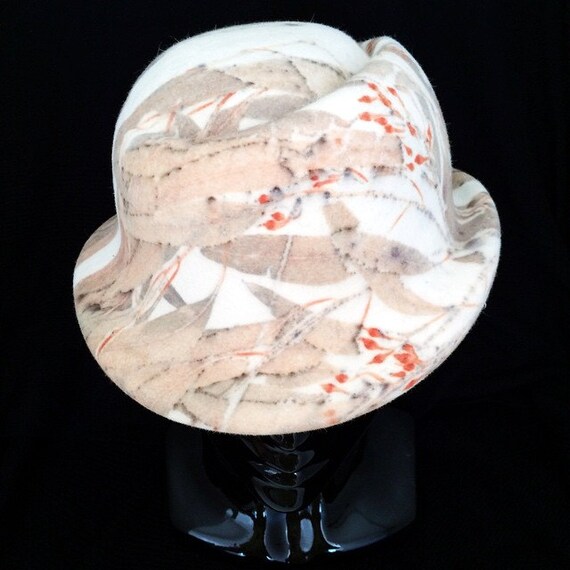 |
| Eucalyptus-dyed hat by Justine Gillingham Millinery |
The two hats above are somewhat similar in terms of shape and color scheme. Both have a high level of time, skill and creativity involved. But no one would say they're derivative of each other.
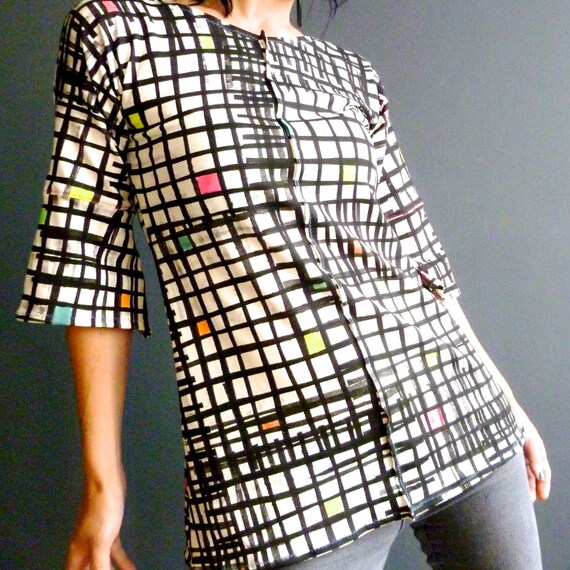 |
| Hand-printed top by iheartfink |
Most handmade screen-printed items are hand-printed often from a computer-generated or mass-produced design onto a mass-produced t-shirt. Think of all the "Keep Calm" shirts you've seen. But defined as "handmade." Amidst all those screen-printed items, Kristen of Fink prints her own designs on fabric before using that fabric to create clothing of her own design. Truly handmade!
I could rant against crappy "handmade" even more, or praise quality makers even more. But I'll leave it here. I'm not going to post any of the numerous examples of bad handmade for a few reasons: (1) it's tacky to single out individual artists (2) how could I choose which of so many to feature? and (3) I'd rather devote photo space on my blog to artists I admire.
** My opinions are my own and do not represent the artists featured. I admire them for being some of the best of handmade, so I wanted to give a shoutout to them. **
** My opinions are my own and do not represent the artists featured. I admire them for being some of the best of handmade, so I wanted to give a shoutout to them. **
Click through the photos/links to reach each item's listing and the artists' Etsy shops. You can also find out more:
Sally Trace Abstract Paintings at www.sallytrace.com.
Steelhip Design at www.steelhipdesign.com.
Justine Gillingham Millinery at www.facebook.com/JGmillinery.
I Heart Fink at iheartfink.com
And, of course, you can find Silverhill Creative right here, at the Silverhill Creative Millinery Facebook page or on the Silverhill Creative shop on Etsy.
Edit:
I would like to qualify my remarks slightly. Part of the challenge of being a maker is finding an audience, finding customers. For example, there are thousands of jewelry sellers on Etsy. To stand out, regardless of how simple the jewelry is, requires time, creativity and skill. I applaud that.
Lots of Etsy sellers have debates about what constitutes "handmade." They will never all agree. And it doesn't matter anyway. If it fits Etsy's definition of handmade (or Amazon's when they launch), then it can be called handmade. Ultimately, there are different degrees of handmade.
And, to me, the implied message from the maker matters. If someone combines Thing A and Thing B — say a mass-produced pendant on a mass-produced chain — I have a very different reaction if that seller says (metaphorically) "Behold! I am an artiste! A creative genius!" than if that seller says, "I like this thing I put together, and I hope you like it, too." If that seller's customers like it, great! I, personally, won't be applauding the ingenuity.
In certain circles, Etsy has a reputation as being the home of cheesy crafters. And there is a lot of stuff that is hokey or amateurish. But there is also a lot that goes way beyond what most people think of when they think handmade.
Edit:
I would like to qualify my remarks slightly. Part of the challenge of being a maker is finding an audience, finding customers. For example, there are thousands of jewelry sellers on Etsy. To stand out, regardless of how simple the jewelry is, requires time, creativity and skill. I applaud that.
Lots of Etsy sellers have debates about what constitutes "handmade." They will never all agree. And it doesn't matter anyway. If it fits Etsy's definition of handmade (or Amazon's when they launch), then it can be called handmade. Ultimately, there are different degrees of handmade.
And, to me, the implied message from the maker matters. If someone combines Thing A and Thing B — say a mass-produced pendant on a mass-produced chain — I have a very different reaction if that seller says (metaphorically) "Behold! I am an artiste! A creative genius!" than if that seller says, "I like this thing I put together, and I hope you like it, too." If that seller's customers like it, great! I, personally, won't be applauding the ingenuity.
In certain circles, Etsy has a reputation as being the home of cheesy crafters. And there is a lot of stuff that is hokey or amateurish. But there is also a lot that goes way beyond what most people think of when they think handmade.
Wednesday, July 1, 2015
"Hat of the Week": Changing the Style
 |
| Brown tilt fedora |
The title of this blog post actually refers to two things: First, the different ways this hat can be worn. And second, how dramatically the shape changed from what was blocked.
Felt hats are made by steaming felt and shaping it over a wooden form called a hat block. The hat block determines the shape and size. That means that ideally you need a different block for each size and shape you want to make. But blocks are very expensive, so it is possible to make some changes and play around with the finished shape.
 |
| A wooden upturn brim block and basic dome crown block. |
I bought the hat block set above on eBay. It is a vintage set, and it was probably one of my earlier hat-block purchases. The crown is a basic dome shape. The crown then pushes down through the brim shape you see in the back, so the brim has a dramatic upturn. Very 1960s. And when I pulled the felt out of this blocked shape ... I did not like it. It was too intensely dramatic and too dated (but not in a popular vintage way).
 |
| Freshwater pearls and seed beads on the bow. |
As you can quite obviously see, the finished shape is completely different! This is one of the things that can make millinery work very fun and creative. I cut the brim down to almost nothing, leaving an upsweep at the front and right. Then I "bashed" the crown. "Bashing" is a term for creating a fedora shape crown by hand.
The brim edge is wired to hold its shape and bound with a matching grosgrain ribbon. It has a pinky mauve bow for feminine style. And beading! Freshwater pearls and seed beads.
The reason I call this hat a "tilt" fedora is because it's smaller than the average woman's head size. I designed it to be worn tilted to the left on head sizes 22.25" and larger. It is a very vintage style — but this time 1940s instead of 1960s. The crown is high, too, which makes it a dramatic style. It's not a hat for the shy hat-wearer! But if you have confidence, you can totally pull it off.
And what about ladies with head sizes of 22" or smaller? Then this hat can be worn just as a regular fedora, straight down on the head. If you're on the edge between sizes, you can choose to wear it down onto your head or higher, perched and tilted.
This hat is 35% off through July 6 only. No coupon code is needed.
The brim edge is wired to hold its shape and bound with a matching grosgrain ribbon. It has a pinky mauve bow for feminine style. And beading! Freshwater pearls and seed beads.
The reason I call this hat a "tilt" fedora is because it's smaller than the average woman's head size. I designed it to be worn tilted to the left on head sizes 22.25" and larger. It is a very vintage style — but this time 1940s instead of 1960s. The crown is high, too, which makes it a dramatic style. It's not a hat for the shy hat-wearer! But if you have confidence, you can totally pull it off.
And what about ladies with head sizes of 22" or smaller? Then this hat can be worn just as a regular fedora, straight down on the head. If you're on the edge between sizes, you can choose to wear it down onto your head or higher, perched and tilted.
 |
| A girl with a small head size shows how the high crown can be worn straight down on the head. (Photo by Ting Shen.) |
This hat is 35% off through July 6 only. No coupon code is needed.
I welcome questions about the processes I use to make my hats or about my creative inspirations.
Tuesday, June 23, 2015
"Hat of the Week": Vintage Treasure and Signature Style
 |
| Bottle green fedora with vintage silk faille ribbon. |
This hat is a perfect example of why the cost of materials can be more relevant to the price of a hat than the exact amount of labor. This hat took no more effort than a wool hat with cotton/grosgrain petersham ribbon would have. It's all about the supplies.
The supplies ... Oh! These supplies!
They are what make this week's "Hat of the Week" truly special.
The felt is a flat fur felt hood. Nothing too noteworthy there. But the beautiful color — bottle green — isn't really available here in the U.S. There aren't very many millinery suppliers around. Three main ones in the U.S. that I know of, and a smattering of other sources. So for a felt this color, I had to order from Germany! And, yes, that means the cost of the felt was a lot higher than ones I buy domestically. I got only one felt in this color, so this is the one and only (for now) bottle green hat I've made.
This fedora also has semiprecious stones: a jade bead surrounded by green goldstone beads. (Beads and semiprecious stones are a frequent feature in my work.)


The most rare and stunning part of this hat is the ribbon. I don't know the exact date of this ribbon. It is possibly as old as 1910s, and certainly pre-WWII. It comes from the Columbia Ribbon Company of Haledon, N.J., a silk mill that made hatband ribbons.
I wish they still made ribbons like this nowadays! Everything about it is gorgeous, including the copperplate etching label. My vintage-loving heart is swooning.
What's not so gorgeous is the yellowing paper. The paper separating layers of vintage ribbon looks charming and seems like it would protect the ribbon. But the acids from the paper can cause vintage ribbons to deteriorate, sadly. Fortunately, the amount of ribbon I used on this hat was in excellent condition. I will be removing the rest of the ribbon from the roll for its safety (and also so I can see how much is left).

My original plan for this hat — and the reason I got this specific color of felt — was to make a hat for myself. The ultimate "me" hat.
... And then, when I was finished, I discovered rather than keep it for myself, what I really wanted was to share it with the world. So, I added it to my shop.
I have a lot of thoughts on signature style, which could take up a full blog post. Some milliners have a very distinct signature style; some don't.
I don't have a signature style per se. But, if I do have anything close to a signature style, this is it. Vintage trims, semiprecious stones, beaded embellishments and ribbon cockades are some of my favorite elements to work with. The felt was blocked on wood hat blocks — but additional shaping of the brim and crown was done by hand.
This hat is 25% off through June 29. No coupon code needed.
Questions about my supplies or process are welcome.
Wednesday, June 17, 2015
"Hat of the Week": Excited by "Boring" Hats
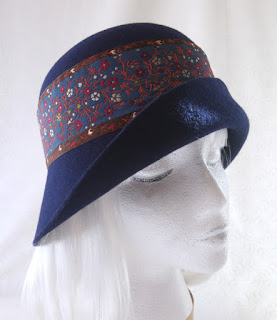 |
| Navy 1920s-style Cloche |
As much as I love fancy hats, my heart truly belongs to casual hats. I'm a vintage gal at heart. It used to be that women wore hats every day, not just for weddings, races and fancy events. There's a charm to everyday hats. A lived-in feel that makes the hat part of the wearer, not just a decoration on top.
This past weekend was the 10th Annual Jazz Age Lawn Party in New York. (I've never been, and I so want to go sometime!) Most people who go dress up in their 1920s best — from authentic vintage to reproductions to costumes.
Evening ensembles with beaded dresses, metallic shoes, dark makeup and fancy headpieces are the most spectacular to look at. But would a 1920s woman, even the most modern flapper wear an evening outfit to a daytime picnic? Probably not. But I think a well-done historically accurate outfit can be just as exciting.
 When most people think of flapper fashions, they most often picture what you get if you Google "flapper costume": fringed dresses and a sequined headband with a feather stuck in it. Sad. Flapper fashions were so much more than that. Some of them were comparatively plain, but still fashionable. (And let's not forget that not every woman — not even every stylish young woman — was a flapper.)
There's something about everyday hats that jazzes me up. (Pun intended.) When I saw the most recent Great Gatsby movie, my favorite hat was a barely glimpsed pink cloche on an extra. It was slightly battered looking. It wasn't slick and overly perfect. As a result, it looked like a real hat a woman from that era would wear. It didn't look like a costume.
This week's "Hat of the Week" is inspired by the real fashions of the 1920s. It's not 100% historically accurate. It's not based on a specific extant cloche. The trim is vintage, but I'd guess it's from the 1970s. This navy cloche, though, is 100% historically inspired. It's designed to be an everyday hat. And it pairs as well with jeans and a t-shirt as it does with a 1920s-style day dress.
 |
| A model shows off the navy "everyday" cloche. Photo by Ting Shen |
Tuesday, June 9, 2015
"Hat of the Week": Beading ... and My Dirty Little Secret
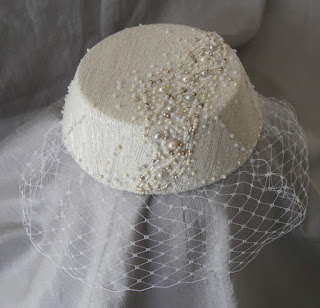 |
| Beaded Bridal Headpiece with Veil |
25% off. No coupon code needed. And back to regular price on Monday.
Best of all, it's ready to ship! So if you're a procrastinator or just planning a wedding in a short time, it's the perfect headpiece. And, hey, weddings are expensive. This hat — even at full price — is not.
This is a silk/cotton fabric with metallic threads on a buckram base. Also has a nylon veil and elastic to hold it in place.
But really, this hat is all about the beads. If you've seen some of my other hats, you might know I have a weakness for beads and beading. I have amassed a collection of many different beads. Sadly, my favorite bead store recently closed. This piece has several styles of beads: freshwater pearls; white, cream and iridescent seed beads; iridescent bugle beads, and vintage micro beads. All were sewn on by hand, a process that took many hours.

And here's my dirty little secret: I don't charge for my time. Well, not exactly. I do charge for my time somewhat, but I base my prices more on the cost of materials.
It's part of my philosophy of pricing. I do what I think is fair — for me and for customers. I think nicer, higher quality materials should cost more. A simple silk tulle veil should cost more than an elaborately constructed nylon or polyester one. (Personally, I would never pay $100 for a polyester shirt, no matter the brand. But I would perhaps be willing to pay that amount for a silk shirt.) I don't think customers should have to pay more if a material misbehaved or I had to unpick some stitches.
So that's my dirty little secret. Also, I really like beading, so it's not as much "work" as certain other millinery tasks.
I'm newer to bridal millinery than I am to other aspects of hat-making. I never was the wedding-dreams, "bridezilla" type. That's probably why I didn't gravitate toward making bridal headpieces at first. But since I've done it, I can't wait to do more.
In my opinion, bridal work is the ultimate creative challenge as a milliner. It can be simple or elaborate. Usually, it's monochromatic, which forces more thoughtful decisions about texture and proportion. There are so many amazing places bridal hats can go. Check out my Bridal Hats board on Pinterest for some examples of what other milliners are doing with shades of white.
 |
| The veil drops to about cheekbone level. |
Subscribe to:
Posts (Atom)